

Table of contents
- Quick Summary
- What is the Gross Profit Gap?
- The Difference Between Theoretical Gross Profit (TGP) & Actual Gross Profit (AGP)
- What creates a gap between Theoretical Gross Profit & Actual Gross Profit?
- The Impact of the GP Gap on Pubs
- How to Minimise your GP Gap
- Operational Consistency is Key
- Key Takeaways
Quick Summary
The gap between theoretical gross profit and actual gross profit can have a significant impact on pub profitability. While most operators understand the common causes of GP variance, such as waste, over-pouring, theft and poor stock control, many struggle to address these issues consistently.
In this article, we’ll explore what theoretical gross profit is, how it differs from actual gross profit, and why the gap between the two matters. You’ll learn the most common causes of GP leakage, the impact it can have on your pub’s performance, and the practical steps successful operators take to improve gross profit margins.
In this article, you’ll learn:
- What the gross profit gap is and why it matters.
- The difference between theoretical gross profit (TGP) and actual gross profit (AGP).
- The most common causes of GP variance in pubs.
- How profit leakage impacts profitability and cash flow.
- Practical ways to reduce the gap between TGP and AGP.
- Why building a stock control culture drives better results.
- How consistency helps high-performing pub groups protect profit across multiple sites.
What is the Gross Profit Gap?
The Gross Profit (GP) Gap is the difference between the profit your pub should be making and the profit it actually makes. More specifically, it is the gap between your theoretical gross profit (TGP) and your actual gross profit (AGP).
Every pub will experience some level of variance, as hospitality is a people-driven industry where factors such as cellar waste, staff discounts, food spoilage and promotions are part of day-to-day operations.
The real problem arises when that gap becomes a recurring pattern, rather than an occasional exception. If your pub is consistently missing its GP target month after month, it indicates that profit is leaking from the business somewhere along the line.
What’s important to understand is that the GP gap rarely has a lone cause. Two pubs might buy from the same suppliers, sell the same products, and generate the same turnover, yet achieve very different profit margins. That’s because the most frequent causes of gaps in gross profit are a variety of operational inconsistencies.
A persistent GP gap can highlight weaknesses in everyday processes such as stock control, product handling, staff training, cellar management, portion control, or the monitoring of discounts and complimentary items. Individually, these issues may seem minor, but over time, they can have a significant impact.
The Difference between Theoretical Gross Profit (TGP) & Actual Gross Profit (AGP)
To understand why pubs experience a gross profit gap, it’s important to first understand the difference between theoretical gross profit (TGP) and actual gross profit (AGP).
What is Theoretical Gross Profit (TGP)?
Theoretical gross profit is the maximum profit margin a pub could achieve under perfect operating conditions.
In theory, every pint is poured perfectly, every spirit is measured accurately, every meal exactly follows the recipe specification, and every item sold is charged at full menu price. There is no wastage, no theft, no spoilage, no over-portioning and no stock losses.
Because of this, theoretical gross profit acts as a benchmark. It shows operators what profit they should be achieving if every product purchased is converted into revenue as efficiently as possible.
What is Actual Gross Profit (AGP)?
Actual gross profit is the profit margin your pub achieves in reality.
It considers the true cost of the stock used and the actual revenue generated through sales. Unlike theoretical gross profit, actual gross profit reflects the realities of running a busy pub, including wastage, discounts, staff errors, stock losses, over-pouring and other day-to-day operational challenges.
This figure shows what is actually reaching the bottom line and is often the clearest indicator of how effectively a pub is managing its stock and operational processes.
Theoretical Gross Profit vs Actual Gross Profit
So, put simply:
Theoretical Gross Profit asks: “What should we have achieved?”
Actual Gross Profit asks: “What did we actually achieve?”
The difference between the two is where profit leakage occurs and the gross profit (GP) gap can be found.
For example, if a pub’s theoretical gross profit calculation suggests it should be achieving a GP of 72%, but its actual GP is only 68%, that 4% variance represents potential profit that has been lost somewhere in the operation.
The goal is not to eliminate the gap entirely. Some variance in GP is unavoidable due to the nature of the industry. The objective is, rather, to understand what is causing the difference, and as a result employ consistent processes to keep the gap as small as possible.
The most successful operators use theoretical gross profit (TGP) as a guide and actual gross profit as a measure of performance. Together, they provide a clear picture of where opportunities for improved profitability exist, maximising the return on every keg, bottle and plate sold.

What creates a gap between Theoretical Gross Profit & Actual Gross Profit?
Most pub operators will be aware of the factors that impact gross profit. In many cases, these issues have already been identified through stocktakes, management reports or day-to-day observations.
The problem is rarely a lack of awareness, but rather allowing small losses and inefficient practices to continue unchecked.
While each incident may seem insignificant on its own, their cumulative impact can create a substantial gap between theoretical gross profit (TGP) and actual gross profit (AGP). The larger and more persistent this gap becomes, the more profit is quietly leaking from the business.
Below are seven of the most common causes of GP variance in pubs.
1. Cellar Waste
Some stock losses are unavoidable, particularly on draught products. Beer lost during line cleaning, sediment in cask ales and product wasted through excessive fobbing can all reduce yield and impact profitability.
However, excessive cellar waste often points to issues that can be addressed. Poor cellar temperature control, equipment faults and inconsistent maintenance routines can all increase product loss and reduce the number of sellable pints from each keg or cask.
2. Over-Pouring and Unauthorised Freebies
A few extra millilitres in a spirit measure or a slightly overfilled wine glass may not seem significant. However, when repeated hundreds of times a week, those small losses quickly add up.
Similarly, unauthorised freebies given to customers, friends or staff members can have a noticeable impact on profit margins when not properly monitored and accounted for.
The most profitable operators ensure serving standards are consistent across the entire team, using measured pours and enforcing clear policies around complimentary products.
3. Promotions and Discounts
Promotions can be an effective way to drive footfall and sales, but they can also reduce gross profit if not carefully managed.
Every discount lowers the revenue received from a product, while the cost remains the same.
4. Theft
Unfortunately, theft remains a reality for many hospitality businesses.
This can take many forms, including stock being taken by staff, customers helping themselves to products, or items being consumed without being properly recorded through the till. Even relatively small losses can have a significant impact over time, particularly on high-volume products.
Regular monitoring, transparent procedures and a strong stock control culture can help reduce opportunities for stock to go missing.
5. Wastage
Every pub experiences some level of waste, but problems occur when losses are not tracked or understood.
Broken bottles, spoiled food, out-of-date stock and products that are prepared but never sold all contribute to GP erosion. If these losses are not recorded properly, they can create confusion around stock figures and make it harder to identify the true cause of poor GP performance.
6. Poor Stock Control
Weak stock control processes often sit at the heart of GP variance.
Deliveries that are signed off without being checked, stock rooms that are disorganised, poor stock rotation and excessive ordering can all contribute to unnecessary losses. Over time, these small operational issues create inconsistencies that make it difficult to maximise the yield from purchased stock.
The best operators understand exactly what stock they have, where it is and how quickly it is being used.
7. Lack of Training
Many GP issues can ultimately be traced back to a lack of training.
If staff don’t understand correct portion sizes, pouring measures, stock rotation procedures or why stock control matters, mistakes become inevitable and frequent. Without clear guidance, different team members may follow different processes, creating inconsistency across the business.
Comprehensive training helps ensure everyone is working to the same standards and understands how their actions directly impact profitability.
What Do These Causes Have in Common?
So, what do all these causes have in common?
They’re all examples of operational inconsistencies.
What’s interesting about these causes is that none of them are particularly new or surprising. Most operators already know these profit drains exist and many will have seen them highlighted during previous stocktakes.
The difference between high-performing pubs and struggling pubs is rarely knowledge. It’s consistency. The most successful operators don’t have fewer opportunities for waste, loss or error. They simply have better routines, stronger controls and a culture that prevents small issues from becoming costly habits.

The Impact of the GP Gap on Pubs
A gap between theoretical gross profit (TGP) and actual gross profit (AGP) isn’t just a stock control issue. It has a direct impact on the financial health of your pub.
With margins for hospitality businesses under constant pressure, every percentage point of lost gross profit matters.
While a GP variance may seem small on paper, the cumulative impact over weeks, months and years can significantly affect profitability, cash flow and overall business performance.
Reduced Profitability
Gross profit is the engine that drives every pub business. It determines how much money is left from sales after the cost of goods sold has been deducted and provides the funds needed to cover labour, rent, utilities, business rates and other operating expenses.
When the gap between theoretical and actual gross profit grows, less money reaches the bottom line. A few pence lost from every pint poured, a handful of unrecorded freebies or a small amount of waste each day may seem insignificant in isolation, but together they can amount to thousands of pounds of lost profit over the course of a year.
This is why successful pub operators focus so heavily on yield. The goal is to maximise the return from every keg, bottle and ingredient purchased, ensuring as much of that spend as possible is converted into profitable sales.
Cash Flow Pressure
One of the first signs of a widening GP gap is increased pressure on cash flow.
Many operators recognise the symptoms:
Spend on stock continues to rise, but revenue doesn’t increase at the same rate.
Cash reserves begin to fall.
Stock levels start building up unnecessarily.
Stock holding days increase.
Certain products are repeatedly reordered despite slow usage.
When profit leakage goes unchecked, pubs often find themselves spending more money without seeing the expected return. Over time, this places additional strain on cash flow and limits the business’s ability to invest in staffing, facilities or growth opportunities.
Hidden Business Risk
The GP gap can also create risks that are not immediately obvious.
When profitability falls, many operators instinctively look at sales performance, footfall or supplier pricing. While these factors are important, the root cause of poor financial performance is often operational rather than commercial.
Issues such as poor stock rotation, inconsistent serving standards, excessive waste, inadequate training or weak controls around discounts can quietly erode margins without attracting immediate attention.
This makes the GP gap particularly dangerous. Profit can be leaking from the business every day without there being a single major issue to identify. Instead, the problem is often the accumulation of small inconsistencies across multiple areas of the operation.
Why This Matters More Than Ever
The hospitality sector continues to face rising costs, tight margins and ongoing economic pressures. In this environment, operators cannot afford to overlook profit leakage.
It’s not enough for a pub to be busy. High sales volumes do not automatically translate into healthy profits. A venue can be packed every weekend and still struggle financially if it is failing to achieve the gross profit it should be generating.
That’s why understanding and reducing the gap between theoretical gross profit and actual gross profit has become such a priority for leading pub groups. Every percentage point recovered is real money that can be reinvested into the business, helping operators build a more profitable and resilient operation.
Ultimately, the GP gap isn’t just a stock metric. It’s a measure of how effectively your pub is turning purchases into profit. The smaller the gap, the more money stays in the business where it belongs.
How to Minimise your GP Gap
The good news is that most causes of GP variance can be reduced or eliminated through relatively simple operational improvements. The challenge isn’t identifying where profit is being lost. It’s creating the routines and behaviours needed to stop those losses from becoming part of everyday operations.
It’s not about some complicated stock management system or business plan. It’s about creating a consistent routine, doing the basics well and focusing on the impactful quick wins. Once you’ve put in the time and effort, the impact on GP will show.
The most successful pub operators understand that protecting gross profit is about getting the maximum return from every product purchased.
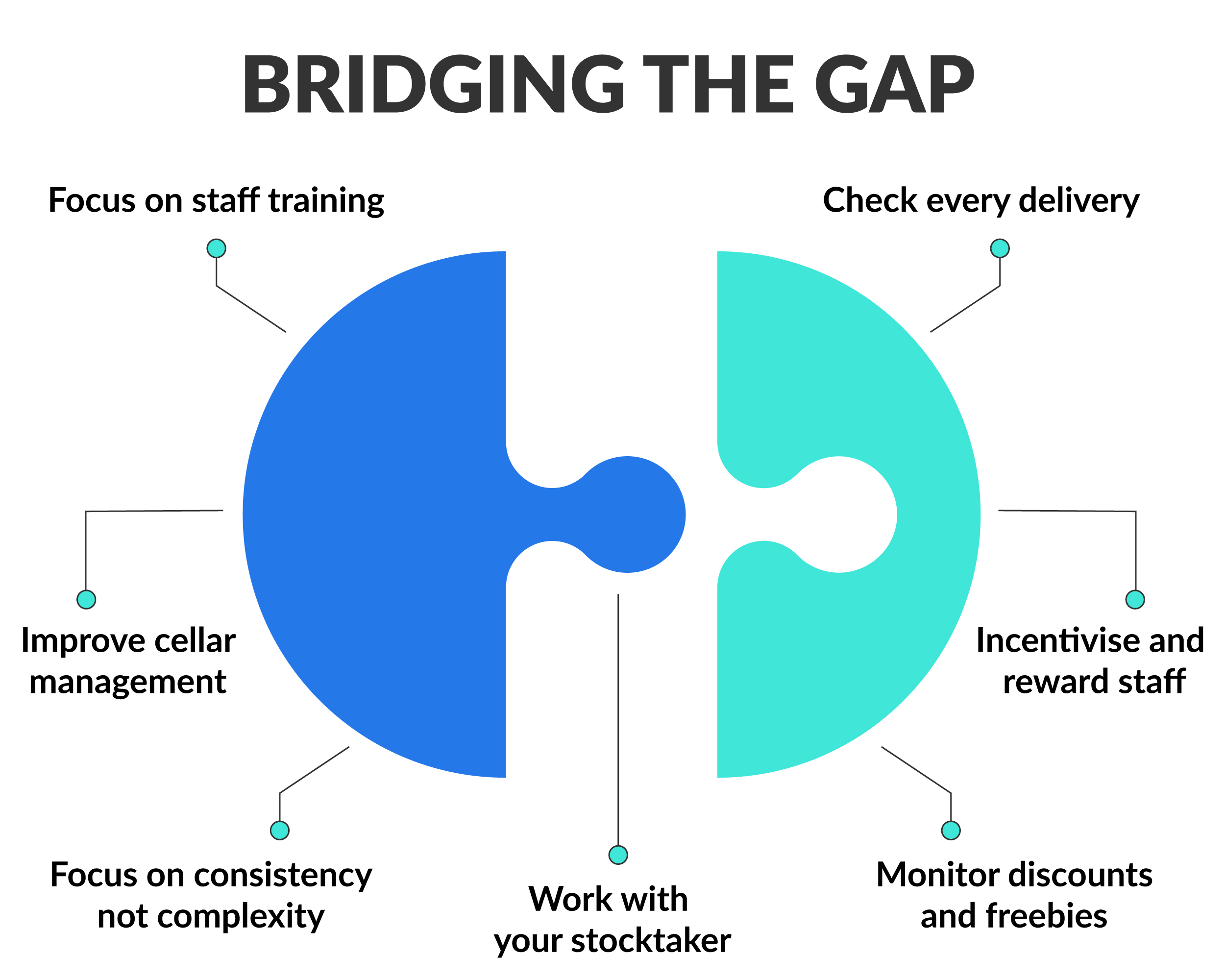
Here are seven ways to reduce the gap between theoretical gross profit and actual gross profit.
1. Check Every Delivery
Profit protection starts before stock even reaches the shelf.
Many operators make the mistake of signing off deliveries without properly checking what has arrived. However, inaccurate deliveries, missing items and invoice discrepancies can all impact GP before a product is ever sold.
When accepting deliveries, make sure you:
- Check quantities against the order and invoice.
- Verify the products delivered are correct.
- Identify damaged or missing items immediately.
- Ensure pricing matches what was agreed.
It’s also important that staff understand the value of this process. A delivery signed off incorrectly can create stock variances that are difficult to identify later.
2. Focus on Staff Training
Your team plays a huge role in protecting profit margins.
Without proper training, even the most robust stock control processes can break down. Staff should understand not only what procedures to follow, but why they matter.
Training should cover:
- Correct spirit and wine measures.
- Portion control for food.
- Stock rotation procedures.
- Recording waste and breakages.
- Delivery checking processes.
- Discount and complimentary product policies.
For example, a consistently overfilled wine glass may delight customers in the short term, but repeated hundreds of times throughout the year it can have a significant impact on profitability.
When everyone follows the same standards, consistency improves and GP variance reduces.
3. Improve Cellar Management
The cellar is often one of the biggest opportunities to improve yield and reduce avoidable waste.
Temperature fluctuations, poor maintenance and ineffective line cleaning practices can all reduce the amount of sellable product available from each keg or cask.
Simple steps include:
- Regularly monitoring cellar temperatures.
- Ensuring line cleaning is carried out correctly.
- Understanding expected wastage allowances.
- Investigating excessive fobbing or product loss.
- Addressing equipment issues quickly.
Even small improvements in cellar management can have a noticeable impact on draught yield and overall gross profit performance.
4. Monitor Discounts & Freebies
Discounts and complimentary products can be valuable tools when they’re managed correctly. Problems arise when they aren’t monitored.
Whether it’s staff discounts, promotional offers or unauthorised giveaways, every discounted item reduces the revenue received while the cost of the stock remains unchanged.
Operators should:
- Review discount reporting regularly.
- Monitor staff discount usage.
- Ensure promotions are authorised and measured.
- Record complimentary products appropriately.
Sometimes the biggest GP improvements come from tightening controls around practices that have become normalised over time.
5. Incentivise & Reward Staff
Protecting gross profit shouldn’t be seen as a management responsibility alone. The entire team should understand the role they play in reducing waste and improving profitability.
Creating incentives can help reinforce positive behaviours and encourage accountability across the business.
Examples might include:
- Rewarding teams for achieving GP targets.
- Recognising improvements in stock control performance.
- Celebrating reductions in waste or stock variance.
- Sharing site performance results with staff.
When employees understand how their actions affect profitability and are recognised for good performance, they’re more likely to engage with stock control procedures and take ownership of results.
6. Work in Partnership with Your Stocktaker
The best operators don’t see stocktaking as a box-ticking exercise. They see it as an opportunity to improve.
Stocktakers can help identify trends, highlight areas of concern and provide valuable insight into where profit leakage is occurring. However, the greatest benefits come when operators actively engage with the process.
High-performing sites will often:
- Review stocktake results in detail.
- Walk the site alongside their stocktaker.
- Discuss recurring issues and trends.
- Focus on problem products and categories.
- Act on recommendations between stocktakes.
The more engaged operators are with the process, the more value they gain from the information available to them.
7. Focus on Consistency, Not Complexity
Ultimately, reducing the GP gap doesn’t require a complicated solution. Most operators already know where profit leakage occurs. The challenge is making sure the same processes are followed every day, by every member of the team.
The pubs that consistently achieve strong gross profit results aren’t necessarily doing anything revolutionary. They’re simply doing the basics well, maintaining high standards and creating habits that minimise opportunities for inconsistency.
Because when it comes to closing the gap between theoretical gross profit and actual gross profit, consistency will almost always outperform complexity.
Operational Consistency is Key
Most pub operators already know what affects their gross profit. They’ve seen it highlighted in stocktake reports, discussed it with managers, or experienced it firsthand. They know that over-pouring, waste, poor stock rotation and uncontrolled discounts can all impact profitability.
The challenge isn’t identifying the issues. The challenge is doing something about them consistently.
Many GP problems persist not because they’re difficult to solve, but because they become accepted as part of daily operations. Processes slip, standards vary between shifts, and good habits gradually disappear.
The operators who consistently achieve strong gross profit results aren’t necessarily the ones with the most sophisticated systems. They’re the ones who have turned good stock control practices into everyday habits.
Build a Stock Control Culture
Reducing the gap between theoretical gross profit and actual gross profit requires more than periodic checks and stocktakes. It requires a culture where every member of the team understands the importance of protecting profit.
A strong stock control culture means:
- Deliveries are checked every time.
- Waste is recorded rather than ignored.
- Stock is rotated correctly.
- Serving standards are followed consistently.
- Discounts and complimentary items are monitored.
Managers regularly review performance and act on findings.
When stock control becomes part of the daily routine, it stops being viewed as an administrative task and becomes a fundamental part of running a profitable pub.
Teams also need to understand why these processes matter. Staff are far more likely to follow procedures when they can see and understand how small actions contribute to the overall success of the business.
Maintain Consistency Across Sites
For pub groups, consistency becomes even more important.
The highest-performing pub groups establish clear standards across all sites. They create consistent routines around stock control, cellar management, staff training and stocktakes, while simultaneously recognising the unique characteristics of individual venues.
This approach helps to reduce variation, improve accountability, and identify genuine site-specific issues (rather than recurring process failures).
Small Habits = Big Results
The reality is that there is rarely a single fix for closing the GP gap. True improvement comes from a series of small actions repeated day after day.
Individually, these actions may seem minor, but collectively, they can have a significant impact on profitability.
The best operators don’t have fewer opportunities for waste, loss or error.
They simply have fewer opportunities for inconsistency.
Ultimately, closing the gap between theoretical gross profit and actual gross profit is not about finding a complicated solution, but rather, about committing to the basics: creating the right habits and building a culture where profitable behaviours become second nature.

Key Takeaways
-
- The gross profit gap is the difference between what your pub should make (theoretical gross profit) and what it actually makes (actual gross profit).
- Theoretical gross profit (TGP) assumes perfect trading conditions, with no waste, theft, over-pouring or stock losses.
- Actual gross profit (AGP) reflects real-world trading performance and accounts for operational losses and inefficiencies.
- A small degree of GP variance is normal, but persistent gaps can significantly impact profitability.
- Common causes of GP variance include cellar waste, over-pouring, unauthorised giveaways, theft, wastage, poor stock control and inadequate staff training.
- The GP gap is often caused by operational inconsistencies, not supplier pricing or sales performance.
- Rising stock spend, falling cash reserves and increasing stock holding days can all indicate a widening GP gap.
- Checking deliveries thoroughly can help prevent stock discrepancies from entering the business.
- Training staff on measures, portion control and stock procedures helps reduce avoidable losses.
- Good cellar management can improve yield and minimise unnecessary product waste.
- Monitoring discounts, promotions and complimentary items helps protect profit margins.
- Rewarding staff for following stock control procedures can encourage accountability and improve performance.
- Working closely with stocktakers can help identify issues and uncover opportunities for improvement.
- The most successful pub operators focus on gross profit margin, not just sales revenue.
- Building a strong stock control culture helps turn good practice into everyday habits.
Want more advice?
Book your free initial consultation with us.